


After an intense weekend at Agro Show in Bednary, we returned with our heads full of conversations. We visited many machinery manufacturers’ and dealers’ stands. We looked at new products, but the most interesting questions came up when the conversation turned to everyday sales.
How does a dealer find out about a price change? How does a salesperson know which options can be combined? What happens to product knowledge when an experienced employee leaves?
These are issues we know well. JAPRIVIO grew out of precisely these everyday difficulties. Our conversations in Bednary showed us that other manufacturers and dealers face similar problems. Behind every seemingly simple quotation are prices, product rules, commercial agreements and the work of many people. A salesperson should not have to piece all of this together from scratch every time.
The situations below are examples from everyday life in the industry, not descriptions of specific companies we met at the fair.
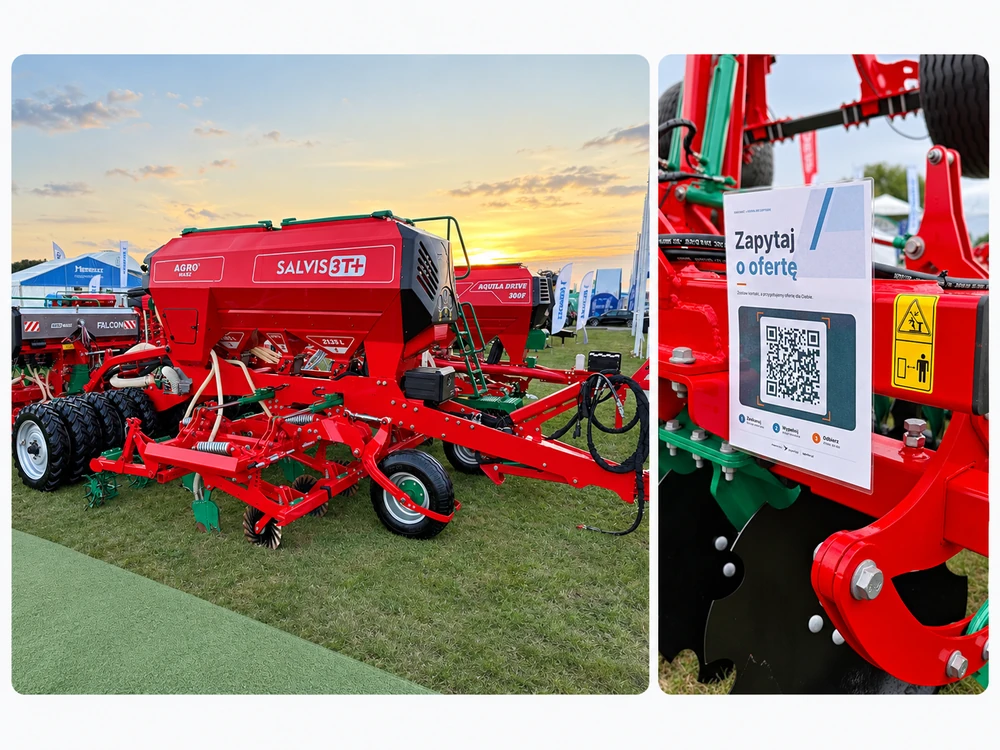
“I sent the quotation. Why is the price already wrong?”
A customer asks a dealer about a machine with optional equipment. The salesperson opens a price list saved on their computer, calculates the price and sends a quotation. The next day, they learn that one of the options has become more expensive. The update arrived by email, but never made it into the file they were using.
Now the document needs correcting and the change needs explaining to the customer. One outdated item was enough to turn a simple conversation into a series of phone calls.
For the salesperson, working correctly should be easy: they select a model and options, and see the current price when preparing the quotation. Behind the scenes, however, price list versions, effective dates, discount rules and data access for individual dealers all need managing. The user needs a clear result. The tool can handle the complexity of pricing.
“Can this option be ordered with this model?”
A manufacturer introduces a new model. The dealer receives a catalogue and materials with photos. But the customer wants to know something very specific: can they order their chosen machine with this equipment?
The answer may be scattered across several places. The options are listed in the catalogue, an exception is explained in an email from the factory, and only the product specialist knows about the latest change. The salesperson checks documents and makes calls before saying “yes” to the customer. If they miss something, the quotation or order needs correcting later.
Selecting options on screen can look simple. Behind it lies the harder task of describing models, versions, dependencies and exclusions. That is the point of a good working interface. The salesperson sees what they can choose and, when needed, receives an understandable explanation. Product rules help them in the conversation instead of forcing them to search several files for answers.
“We sent the information to all dealers”
The factory adds a new option and sends a message to its network. One dealer includes it immediately. Another waits for the price. A third still uses their own spreadsheet, where the new option does not yet exist.
The message has been sent, but customers in different places receive different answers. The manufacturer only finds out when a quotation needs explaining or an order needs correcting.
A dealer needs a simple workspace: they open a product and see the current options, prices and materials. To make that possible, someone must establish who introduces a change, when it takes effect and whom it applies to. Managing a dealer network starts with whether everyone can work to the same, current rules.
“Ask Marek, he’ll know”
In many companies, there is someone who knows the products almost by heart. They remember unusual configurations, pricing exceptions and situations that are not covered in the catalogue. When someone has a difficult question, the call goes to them.
That knowledge is extremely valuable. The problem arises when a new salesperson has to ask for help every time, or when an experienced colleague changes jobs. With staff turnover, the team loses some of its answers and learns the same things all over again.
A new colleague does not need the entire email archive to get started. They need simple guidance while working: what they can offer, what to watch for and when to ask a specialist to make a decision. To make that possible, people’s knowledge must first be collected, organised and linked to products and sales rules. That effort should not have to be repeated for every quotation.
A simple screen needs good organisation behind the scenes
After Agro Show, we have an even clearer view of what we want to build at JAPRIVIO. An application for a salesperson or dealer should be a simple working interface. Users come to it to serve a customer: choose the right machine, prepare a quotation and pass the order on.
A lot of work goes into that experience. Current prices, option logic, the manufacturer’s commercial rules, dealer permissions and product knowledge all need connecting. We also need to decide what the tool can suggest on its own and what requires human confirmation.
The configurator is one part of that work. What happens before and after configuration matters too: where the information comes from, how the quotation is created and whether the order preserves what was agreed in the conversation with the customer.
We returned from Bednary convinced that these everyday problems are worth continuing to solve. If you manufacture machinery or work with a dealer network, tell us how quotations are prepared in your company today. We would be happy to see where people have to do work that a well-designed tool could take on.